Nice Jazz Festival
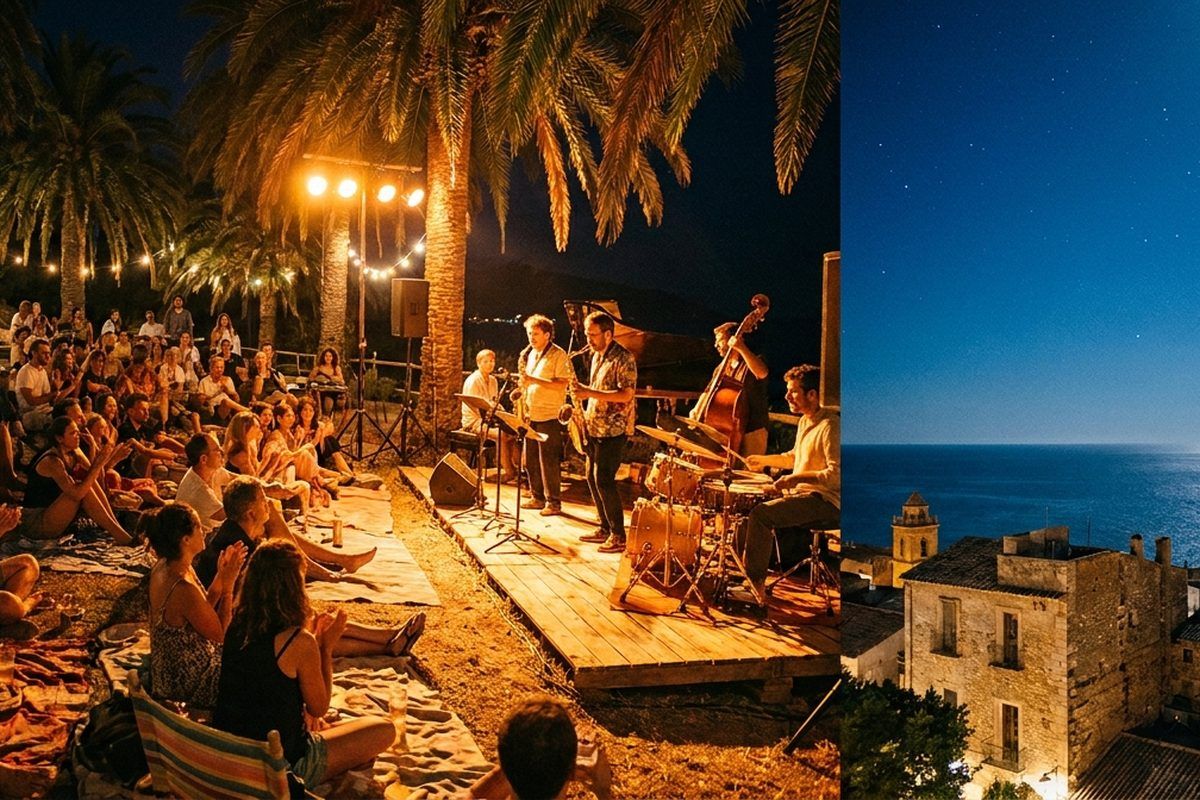
The Nice Jazz Festival is held each July in the centre of Nice, across two open-air stages at the heart of the city. Founded in 1948, it is one of the oldest jazz festivals in the world — its inaugural edition featured Louis Armstrong, Django Reinhardt, Stéphane Grappelli, and Claude Lutter on the same programme. Today the line-up stretches well beyond jazz to include soul, blues, pop, and international artists, but the setting remains the same: Nice in July, outdoors, with the Mediterranean summer in the air.
What Is the Nice Jazz Festival?
The Nice Jazz Festival — known locally as the Nice Jazz Fest’ — was founded in 1948 as an outdoor summer music event, one of the first of its kind in Europe. That inaugural programme was ambitious: Louis Armstrong headlined, alongside Django Reinhardt, Stéphane Grappelli, and Claude Lutter. The festival established Nice as a serious address for live music from the outset.
Over the following decades the event moved through several phases. From the early 1970s it was held in the gardens of the Arènes de Cimiez — the Roman amphitheatre site in the hills above Nice, shaded by olive trees — an atmospheric venue but a significant journey from the city centre. In 1994 the event took its current name and opened its programme to a wider range of musical styles. Since 2018 it has returned to the heart of the city: Place Masséna and the Théâtre de Verdure in the Jardin Albert Ier.
The musical scope today is broad. The festival’s headline acts draw from across jazz, soul, blues, funk, and mainstream international pop — the line-up for any given edition typically mixes artists with deep roots in jazz alongside names with wider mainstream recognition. The 2026 edition features Sting, Busta Rhymes, and Lola Young among its headliners.
When Does the Nice Jazz Festival Take Place?
The festival takes place each year in late July, running for three to four evenings. The 2026 edition is scheduled for 23–26 July 2026.
Dates are typically confirmed in the spring, and the headline programme is often released in stages. An early-bird blind pass is usually available before the full line-up is announced, at a reduced price — worth watching for if you are planning to attend multiple evenings and can book without knowing the programme in advance.
Where Does the Nice Jazz Festival Take Place?
Since 2018, the festival has occupied two outdoor venues in central Nice:
Place Masséna is the main stage. This is the large open square at the foot of the Promenade du Paillon, framed on one side by the ochre and red neoclassical facades that define central Nice. It is a standing-only area in front of the main stage — no seating is provided.
Théâtre de Verdure is a more intimate outdoor theatre set within the Jardin Albert Ier, the garden that runs from Place Masséna toward the waterfront. The Théâtre de Verdure has both seated and standing sections, and its scale makes it well suited to smaller-ensemble and lower-key performances. The garden setting — with trees and greenery surrounding the stage — gives this venue a different character from the open square of Masséna.
Both venues are within a short walk of each other and accessible on a single festival ticket. The Jardin Albert Ier also sits directly behind the Promenade des Anglais, so the sea is close.
How to Get There
Both festival venues are in central Nice and well served by public transport.
By tram: The simplest option is the Lignes d’Azur tram network. Take Line 1 or Line 2 to the Masséna stop. A single ticket costs €1.70 and is valid for transfers within 74 minutes. On concert nights, the tram service is reinforced with additional departures running until after the final acts — so returning to your accommodation by tram is straightforward even after a late headliner.
By bus: Several Lignes d’Azur bus routes stop within a few minutes of Place Masséna, including lines 12, 57, 8, and 98. The Masséna bus stop is around three minutes’ walk from the main stage entrance.
By car: Driving is not recommended. Central Nice is difficult for parking at any time, and festival nights bring additional crowds. If you do need to drive, Parc Azur park-and-ride sites are available along the tram routes; parking is free when you show a return tram ticket. Leave the car at a park-and-ride and take the tram in.
From elsewhere on the Riviera: Nice-Ville station is around 1.5 km from Place Masséna — a 15–20 minute walk or a short tram ride. Trains from Cannes take around 35 minutes, from Antibes around 25 minutes, and from Monaco around 20–25 minutes. The festival is a straightforward evening excursion from anywhere along the coast. If you are staying in Vieux Nice or around the Cours Saleya, both venues are within a ten-minute walk.
What to See and Do
Doors typically open at around 6:30 PM, with concerts running through the evening until late. The programme across both stages is worth checking in advance — performances can overlap, so knowing which acts you want to see avoids last-minute decisions.
The Masséna stage draws the headline acts and creates a large-scale outdoor concert experience. Arriving before 8 PM on busy nights secures a better position and avoids the longest entry queues.
The Théâtre de Verdure is the more considered choice for listening — cooler and more sheltered than the open square, with a seating option that suits those who prefer to sit or are attending with children. Jazz-forward and smaller-ensemble acts tend to be scheduled here.
Food and drink stalls are set up throughout the festival area; both cash and cards are accepted, though there is no ATM on site. The Promenade des Anglais is a short walk away and the old town is just to the east.
Where to Stay for the Nice Jazz Festival
The festival takes place in central Nice, which means staying in the city gives you the most convenient access. Vieux Nice and the area around the Cours Saleya are particularly well placed — both festival venues are within a ten-minute walk, and the old town itself is enjoyable to explore before and after the evening concerts.
Practical Tips
Book tickets as early as possible. Popular evenings — particularly when a major headline act is announced — can sell out. Multi-night passes offer significantly better value than single-evening tickets: a four-night pass at €160 works out considerably cheaper than four individual nights at €45 each.
Arrive early on big nights. The best standing positions at Place Masséna go to those who arrive before the bulk of the crowd. Arriving around 7–7:30 PM lets you settle in before the headline acts begin and avoids the longest queues at the gates.
No ATM is on site. Bring cash as well as a card. Food and drink vendors accept both, but it is worth having cash available so you are not dependent on card-only options.
Dress for a summer evening. July nights are warm but can feel cooler once the sun drops — a light layer is worth packing.
PMR access is provided. A dedicated platform for visitors with reduced mobility is installed at the rear of the Masséna stage. Check the official website (nicejazzfest.fr) for the most current details before attending.
The tram is reliable after the show. Services are reinforced on concert nights. Allow for a short queue at the trams immediately after a big set — the crowd disperses quickly once moving.
Frequently Asked Questions
- When does the Nice Jazz Festival take place?
- The festival is held each year in late July, typically running for three to four evenings. The 2026 edition is scheduled for 23–26 July. Dates for future editions are announced on the official website at nicejazzfest.fr.
- How much do tickets cost?
- A single evening costs €45. A two-night pass costs €80, and a four-night pass costs €160. Children aged 10–15 pay €20 per night; children aged 4–9 pay €9. An early-bird blind pass is often available before the line-up is announced, at a lower price — worth checking if you plan to attend multiple evenings.
- Where does the festival take place?
- Since 2018, the festival has been held in central Nice across two stages: the main stage on Place Masséna and the Théâtre de Verdure in the Jardin Albert Ier. Both venues are within easy walking distance of each other.
- How do I get to the festival?
- Take the Lignes d'Azur tram (Line 1 or Line 2) to the Masséna stop. A single ticket costs €1.70 and is valid for transfers within 74 minutes. The tram service is reinforced on concert nights, with extra departures running until after the final acts.
- Is the festival suitable for families with children?
- Yes. Children aged 10–15 pay €20 per night and children aged 4–9 pay €9. The Théâtre de Verdure offers seated sections, which can be more comfortable for younger children than the standing area in front of the Masséna stage. No ATM is available on site, so bring cash or a card for food and drink.