Best Time to Visit the French Riviera
Quand visiter la Côte d'Azur
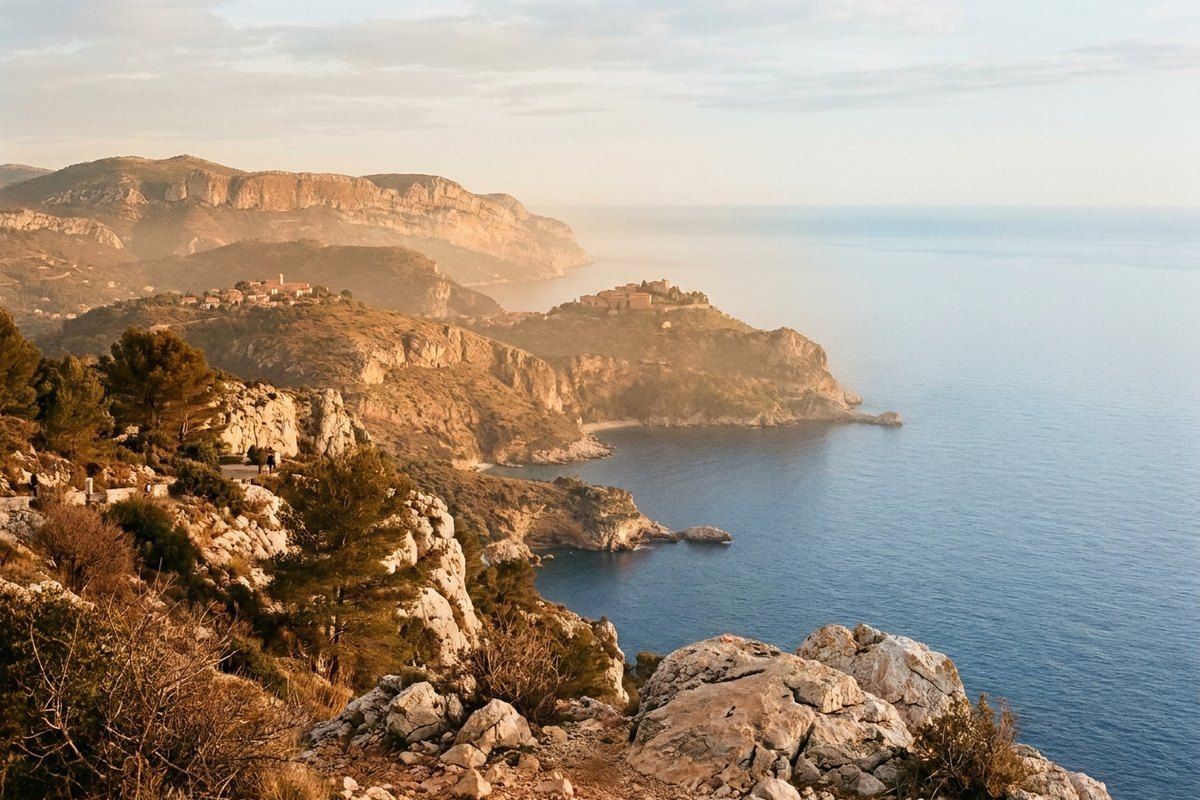
The Côte d’Azur enjoys around 300 days of sunshine a year and a Mediterranean climate that delivers mild winters and long, dry summers. There is rarely a bad time to visit — but there are meaningfully different times, and the right answer depends on what kind of trip you are planning.
For most visitors, late spring (May to June) and early autumn (September to October) offer the best balance: warm and reliable weather, a sea that is swimmable or close to it, and substantially thinner crowds than the July-August peak. If a beach holiday is the priority, summer delivers exactly that, at higher prices. If you want quiet and cheap, winter works, and it comes with two of the region’s most distinctive events.
Spring: April to June
April opens pleasantly. Daytime temperatures in Nice are typically around 16–18°C, the days are long, and rain is possible in the first half of the month but not persistent. The region is unhurried and easy to navigate.
May is the most event-dense month on the Riviera calendar. The Festival de Cannes occupies Cannes for nearly two weeks in mid-May, and the Monaco Grand Prix follows at the turn of the month into early June, filling the principality with racing teams and spectators. Both events drive accommodation demand sharply — plan well ahead if you want to attend either, or even if you simply need a place to stay within an hour of either city during that window.
Outside the events, May is excellent for a visit. The weather is reliably warm and dry, the sea is approaching swimmable at around 17–19°C, and the high-summer crowds have not yet arrived. For exploring Nice’s old town, day-tripping to Antibes, or wandering the lanes of Menton without competition, spring is the most relaxed moment to do it.
June is the transition: temperatures climb toward 24–26°C, the sea reaches 20–21°C, and French school holidays beginning in late June mark the turn toward the busy season.
Summer: July and August
July and August are peak season in every sense. Temperatures reach 28–32°C on most days. The sea climbs to 23–25°C — its warmest point of the year — and the beaches are at their liveliest. For a beach-centred holiday, this is the right time.
The trade-off is real. The Riviera fills in July and August with French domestic holidaymakers and international visitors. Beaches in Nice, Cannes, and Antibes are crowded by mid-morning in August. Accommodation prices run 30–50% above off-season levels, and good-value apartments in popular areas book out months in advance.
The Nice Jazz Festival is the standout event of the summer calendar, running across four evenings in late July at open-air venues in central Nice. It is a genuine reason to be in the city in that window, and — if the programme appeals — makes a late-July visit worth the peak-season pricing.
Autumn: September and October
September is arguably the finest single month on the Riviera for a visitor who missed the spring events. The heat drops to a comfortable 21–24°C, the sea holds the warmth of the summer and is often still at 23–24°C in early September, and the school-holiday crowds disperse once French term begins. Prices ease considerably from the August peak.
October remains warm by northern European standards — around 18–20°C — and the sea cools to about 21°C, still swimmable for many. October and November are the wettest months of the year on the Riviera, though prolonged rain is the exception rather than the rule.
For visitors who want warmth, sea access, manageable crowds, and more room to explore the towns and markets without queuing, September is the obvious choice.
Winter: November to March
November and December bring the most rain. The season turns relatively quickly: January and February on the French Riviera are often clear and sunny, with daytime temperatures in Nice averaging around 13°C. By the standards of most of Europe, it is a mild winter — the palm trees along the Promenade des Anglais reflect that honestly.
The towns slow down in winter, accommodation is cheapest, and the character of the place shifts toward something more local and unhurried. Visitors drawn to the food markets, architecture, and coastal landscape rather than the beach find winter straightforward.
Late February sees two of the region’s most striking events converge. Carnaval de Nice is a fortnight-long street festival — floats, flower battles, and large crowds in the centre of Nice — and one of the major carnivals in Europe. At roughly the same time, the Fête du Citron fills Menton with elaborate citrus sculptures in the gardens of the Biovès. Both events are worth planning around, but accommodation in Nice during Carnival fills early. If late February is your window, book as soon as confirmed dates are released.
Events and When They Fall
The five major events covered on this site fall across late winter, spring, and midsummer. None of them conflict with each other:
| Event | Typical timing |
|---|---|
| Carnaval de Nice | Mid-February to early March |
| Fête du Citron, Menton | Mid-February to early March |
| Festival de Cannes | Mid-May (around twelve days) |
| Monaco Grand Prix | Late May / early June |
| Nice Jazz Festival | Late July (four evenings) |
Exact dates shift year to year and are confirmed months in advance on each event’s official channels. If attending a specific event is part of your plan, check confirmed dates before committing to transport and accommodation — particularly for the Grand Prix and the Film Festival, where even small date shifts can affect train and flight availability.
Frequently Asked Questions
- What is the best time to visit the French Riviera?
- Late spring (May to June) and early autumn (September to October) offer the best balance of warm weather, a swimmable sea, and manageable crowds. July and August are ideal for beach holidays but come with peak prices and the busiest beaches. Late February is the month to visit if you want Carnaval de Nice or the Fête du Citron in Menton.
- When is the French Riviera least crowded?
- November through early April sees the fewest visitors. Winter is genuine off-season: prices are low, the main sites are uncrowded, and the climate is mild by northern European standards. Of the warmer travel months, April and October are considerably quieter than the July-August peak.
- Is the sea warm enough to swim in early June?
- Sea temperatures in June are typically around 20–21°C — comfortable for most swimmers, though noticeably cooler than the July-August peak of 23–25°C. If a warm sea is important to you, late June to September is the window to aim for.
- When should I book accommodation for the French Riviera?
- For July and August, booking six months or more in advance is sensible — particularly for apartments in Nice, Cannes, and Antibes, which fill early. May and early June also require early booking because of the Cannes Film Festival and the Monaco Grand Prix. For April, early May, and September to October, booking a few months ahead is usually sufficient.
- Is it worth visiting the French Riviera in winter?
- Yes, for a quieter and considerably cheaper version of the region. Nice in January averages around 13°C and often sees clear, sunny days. Rain is most likely in November and early December. The Carnaval de Nice and Fête du Citron in Menton both fall in late February, making that a worthwhile point in the winter calendar.
- Which months are best for visiting around an event?
- February for Carnaval de Nice and the Fête du Citron in Menton; May for the Cannes Film Festival and early June for the Monaco Grand Prix; late July for the Nice Jazz Festival. Each event drives accommodation demand sharply in its host city, so book as soon as dates are confirmed.