Monaco Travel Guide: What to See, Do, and Experience
Monaco, la principauté
.jpg)
Why Visit Monaco?
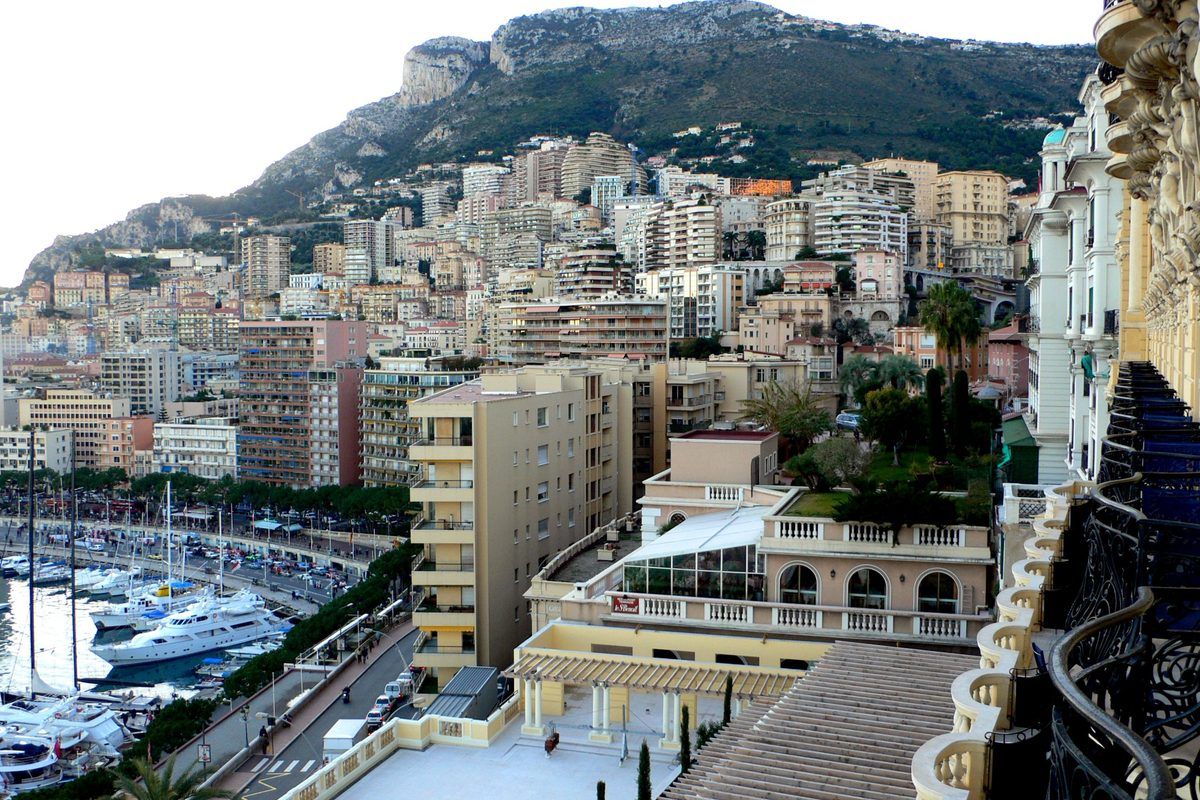
Monaco is unlike anywhere else on the French Riviera. A sovereign city-state smaller than many city parks, it sits between the Maritime Alps and the Mediterranean, sharing its only land border entirely with France. The contrast it presents — a rock-top royal palace above a modern superyacht harbour — is as striking in person as it sounds on paper.
The principality’s reputation for wealth is well-earned, yet Monaco is more accessible than many visitors expect. A TER train from Nice costs a few euros, the public beaches are free, the Casino de Monte-Carlo’s ornate atrium can be visited without spending anything at the gaming tables, and the Oceanographic Museum is one of the genuinely great natural-history institutions in the region. A half-day excursion covers the essentials; a full day gives you time to explore Le Rocher, the harbour, and the main sights at a comfortable pace.
When to Visit Monaco
Spring (April–May) is the most popular window. The weather is reliably warm, crowds are manageable, and the principality looks its best in clear Riviera light. The exception is Grand Prix weekend (late May or early June), when the city-state fills with motorsport fans and accommodation prices across the region spike sharply. If you want to attend the race, plan months in advance. If you want to avoid the crowds, that particular weekend is best avoided.
Summer (June–August) is peak season, with the highest visitor numbers and temperatures. Mornings are the most pleasant time to explore on foot.
Autumn (September–October) is arguably the best time to visit: the Mediterranean is still warm, summer crowds have thinned, and the light is exceptional.
Winter (November–March) is quiet and mild, with most sights remaining open year-round.
Getting to Monaco
The fastest and most practical route from Nice is the TER train from Nice-Ville station. The journey takes around 22–25 minutes. Trains run roughly every 15–30 minutes throughout the day, with up to 66 departures daily, and the fare is inexpensive. Monaco-Monte-Carlo station is underground; the exit deposits you near Casino Square, a short walk from the main sights.
The coastal bus (line 100 from Nice) offers a more scenic option along the corniche cliffs, but the journey takes 45–50 minutes and can be slower in summer traffic.
If you are arriving by car, note that parking in Monaco is expensive and the narrow streets of Le Rocher are off-limits to vehicles registered outside Monaco or the Alpes-Maritimes department.
What to See in Monaco
Casino de Monte-Carlo. Designed by Charles Garnier — the architect behind the Paris Opéra — the Casino’s Belle Époque building is worth visiting for the architecture alone. The ornate public atrium, overlooking Casino Square and its formal gardens, is free to enter. Access to the gaming rooms requires ID (entry is restricted to those aged 18 and over), a smart dress code, and an entrance fee.
Oceanographic Museum (Musée Océanographique). Founded in 1910 by Prince Albert I and built directly into the cliff face of Le Rocher, this is one of the best natural-history museums in southern France. It holds over 6,000 marine specimens and substantial living aquarium tanks. A practical note: visitors arriving by TER train can receive a reduced admission price by showing their same-day ticket at the entrance. The museum closes on Grand Prix weekend and on Christmas Day.
Le Rocher and the Prince’s Palace. The rocky promontory above Port Hercule holds Monaco-Ville, the principality’s historic quarter — a compact network of narrow streets, ochre buildings, and the Cathédrale. The State Apartments of the Prince’s Palace are open to visitors from late March to mid-October (adults €13 in 2026). The Changing of the Guard takes place at 11:55am daily and is free to watch from the square outside.
Port Hercule. Walking the harbour is free and worth doing. The compact anchorage is ringed by a remarkable concentration of superyachts, and during Grand Prix weekend the quayside grandstands offer some of the most dramatic vantage points on the circuit.
Larvotto Beach and Japanese Garden. Monaco’s main public beach, to the east of the centre, is free and accessible, with calm, generally clear water. The adjacent Jardin Japonais — a quiet space of koi ponds, bridges, and traditional planting — is also free to enter.
Jardin Exotique. Monaco’s botanical garden on the western hillside reopened in March 2026 following an extensive renovation. A single ticket covers the garden, the Observatory Cave (accessed by a descent of 300 steps), and the Museum of Prehistoric Anthropology.
Events in Monaco
The Monaco Grand Prix (late May or early June) is the defining event of the international motorsport calendar. The Formula 1 circuit runs through the streets of the principality itself, passing through the famous tunnel, under hotel balconies, and around the tight Fairmont hairpin — a corner that drivers describe as the slowest and most iconic on the calendar.
Where to Stay in Monaco
Monaco’s hotels are limited in number and expensive even by Riviera standards. For most visitors, basing themselves in Nice and making Monaco a day trip by train is the comfortable and cost-effective choice.
Practical Information
Language and currency. Monaco is French-speaking; the Euro is the currency.
Border and entry. Monaco is part of the Schengen Area. There are no routine border controls between France and Monaco for Schengen travellers. Most visitors crossing from France find the transition seamless.
Getting around locally. Monaco is small enough to walk across in under 30 minutes, though the terrain is hilly. The local CAM bus network connects the main sights; single tickets cost around €2 with a daily cap. A network of public lifts and escalators eases movement between the harbour level and Le Rocher.
Costs. Expect to pay noticeably more than in France for restaurant meals and cafés, particularly around Casino Square. Museum admission is reasonably priced; many of the best things to do — walking the port, the beaches, the Casino exterior, watching the Changing of the Guard — cost nothing.
La ligne du littoral The whole coast by train, from Nice
Direct TER trains along the coast — approximate journey times from Nice-Ville. Temps de trajet approximatifs au départ de Nice-Ville.