Monaco Grand Prix
Grand Prix de Monaco
What Is the Monaco Grand Prix?
The Formula 1 Grand Prix de Monaco is one of the most celebrated motorsport events in the world. Held each year on the Circuit de Monaco — a street circuit weaving through the narrow roads of Monte-Carlo and La Condamine — it is a race defined by its location as much as by the sport itself.
The Monaco Grand Prix has been run since 1929, when William Grover-Williams won the inaugural race in a Bugatti. It became part of the Formula 1 World Championship in the very first season in 1950, and has been part of the calendar ever since. Alongside the Indianapolis 500 and the 24 Hours of Le Mans, it is often cited as one of motorsport’s three most prestigious events — a set sometimes called the Triple Crown, though no driver has yet won all three.
The circuit is 3.337 km of public road fitted with barriers, grandstands, and asphalt patches over several weeks. Nineteen corners thread through Casino Square, past luxury hotels, under a short tunnel, alongside the harbour, and through the Swimming Pool chicane before rejoining at Rascasse and Anthony Noghes. The Fairmont Hairpin — taken at around 48 km/h — is the slowest corner in Formula 1; the kink in the tunnel is among the quickest, at around 260 km/h. Overtaking is nearly impossible, which makes qualifying on Saturday as decisive as the race itself.
Setting up the circuit takes around 250 workers six weeks; dismantling it takes another three. For most of the year, the streets are ordinary roads through a small, wealthy city-state.
When Does the Monaco Grand Prix Take Place?
The race weekend has traditionally fallen in late May, though the 2026 and 2027 editions fall in early June, running from Thursday through to Sunday. The programme includes three practice sessions spread across Thursday and Friday, qualifying on Saturday, and the Grand Prix on Sunday afternoon. There is no sprint race at Monaco.
In some recent editions the dates have shifted slightly, running into early June. The Formula 1 calendar for the following season is usually confirmed in the autumn, and tickets go on sale shortly after — often many months before race day.
Where Does the Monaco Grand Prix Take Place?
The Circuit de Monaco runs through the streets of Monte-Carlo and La Condamine in the Principality of Monaco, a small sovereign state on the French Riviera bordering France.
The circuit’s most distinctive landmarks are:
- Sainte Devote — the opening corner, a tight right-hander where the cars funnel off the starting straight
- Casino Square — uphill through the heart of Monte-Carlo, passing the famous casino
- Fairmont Hairpin — the tightest bend, where cars slow to walking pace
- The tunnel — a brief enclosed section under the Fairmont Hotel, one of the few places cars reach high speed
- Swimming Pool chicane — a technical section alongside the outdoor pool complex
- Rascasse — a slow final hairpin before the start-finish straight
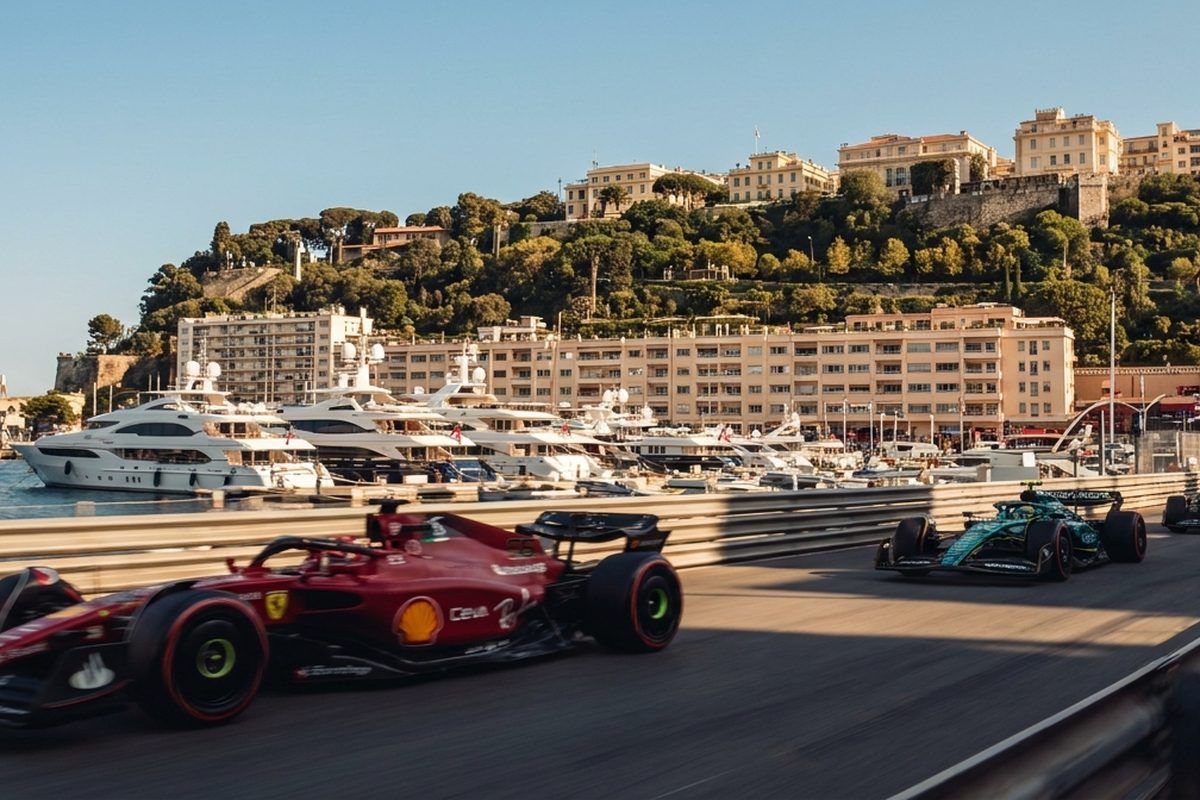
Port Hercule, Monaco’s harbour, provides the backdrop to much of the lower section of the track. During race weekend the port fills with yachts chartered by teams, sponsors, and private guests — the view across the harbour from several grandstands is part of what makes Monaco unlike any other round on the calendar.
How to Get There
The simplest and most practical way to reach Monaco for the Grand Prix is by train from Nice. Direct services run from Nice-Ville to Monaco-Monte-Carlo in around 20 minutes. During race weekend trains run very frequently — roughly every 15 minutes — and tickets cost a few euros. The Monaco-Monte-Carlo station is centrally located and a short walk from the circuit entrance.
Driving to Monaco during the Grand Prix weekend is not advisable. Roads in and around the principality are heavily restricted, parking is very limited, and the journey by car takes much the same time as the train even when roads are clear. The train is faster and considerably less stressful.
After the race on Sunday, the station fills quickly. Queues can stretch to an hour or longer in the immediate aftermath of the finish. The practical approach is to stay in Monaco for the evening — the principality stays lively after the race — and make your way to the station once the crowds have thinned.
What to See and Do
With a grandstand ticket: each session offers a different perspective on the circuit. Practice sessions on Thursday and Friday allow you to study the lines drivers take through specific corners, and grandstands with a screen provide live timing and broadcast coverage. Saturday qualifying is often the most intense session of the weekend — a single mistake eliminates a driver from the front rows in a race where overtaking is so difficult — and many regular attendees consider it as compelling as the Grand Prix itself. Sunday’s race unfolds slowly by modern F1 standards, but the occasion and the setting more than compensate.
Without a grandstand ticket: the MGP Live Fan Zone at Place d’Armes, in the Condamine district close to the track, is free to enter and offers activities, food, large screens, and a concentrated version of the race-week atmosphere. The sound of the cars carries throughout Monaco, and the whole principality — shops, cafés, the harbourfront — takes on a particular energy during the weekend. It is entirely possible to spend a day in Monaco during the Grand Prix and absorb a great deal of the experience without a ticket.
Casino Square is worth a visit at any point during race week. The surrounding streets fill with automotive and related events, and the view down from the casino terrace towards the circuit section below gives a good sense of the elevation changes that define the track.
Where to Stay for the Monaco Grand Prix
Monaco itself has very limited accommodation, and what remains during race week is booked months ahead at premium prices. Most visitors base themselves in Nice — around 20 minutes away by TER train, with frequent services throughout race weekend — where apartments and hotels are far more accessible and considerably less expensive. Staying near the old town or the station keeps both the trains and the city’s evenings within easy walking distance.
Practical Tips
Book early. Popular grandstands sell out many months in advance. The Automobile Club de Monaco (ACM) is the official ticket vendor and the safest place to buy; third-party resellers exist but prices reflect scarcity. Set a reminder for when the next season’s calendar is published.
Consider Thursday. Circuit access passes for Thursday start at around €30 — a modest entry point that lets you explore Monaco during a race weekend without the Sunday crowds or cost. Practice sessions give you real track action at a fraction of the race-day price.
Grandstand K is regularly recommended by experienced attendees as good value, offering views of both the harbour and multiple sections of the circuit including the Swimming Pool area.
Ear protection is essential near the track, particularly close to the tunnel. Even brief exposure to F1 cars at full volume is genuinely loud. Earplugs or protective ear defenders are worth packing.
Dress for late spring. Monaco in late May and early June is usually warm and sunny, but showers are possible. Most grandstands have limited shade, so a hat and sunscreen are practical additions. Smart casual dress is appropriate for the setting — the principality is formal by Riviera standards, and restaurants and bars around the circuit tend to reflect that.
Allow extra time. Monaco is small but extremely busy during race week. Getting between grandstands, finding food, or simply moving around the principality takes longer than usual. Build buffer time into the day, and resist the urge to leave immediately after the chequered flag.
Frequently Asked Questions
- When does the Monaco Grand Prix take place?
- The race weekend has traditionally fallen in late May, but recent editions — including 2026 and 2027 — are in early June, running from Thursday to Sunday with the Grand Prix itself on Sunday afternoon. Check the official Formula 1 calendar each autumn once the following season's schedule is published.
- How much do Monaco Grand Prix tickets cost?
- Prices vary significantly by session and grandstand. Thursday circuit access passes start at around €30. Friday grandstand seats cost roughly €175, Saturday around €450, and Sunday race-day grandstand tickets start at approximately €900–950 for popular stands. Premium hospitality and yacht packages cost considerably more. The official ticket vendor is the Automobile Club de Monaco.
- Can I experience the Monaco Grand Prix without a grandstand ticket?
- Yes, to a degree. The MGP Live Fan Zone at Place d'Armes offers free activities, big screens, and a lively atmosphere. The sound of the cars carries throughout the principality, and Monaco takes on a festival feel for the whole race week — though trackside viewing requires a paid ticket.
- What is the best way to travel from Nice to Monaco for the Grand Prix?
- The train is the easiest option. Direct services run from Nice-Ville to Monaco-Monte-Carlo in around 20 minutes, with frequent departures throughout race weekend. Tickets cost a few euros. After the race on Sunday, queues at Monaco station can stretch to an hour or more — it is worth staying in the principality for a while to let the crowds thin before heading back.
- Is Nice a practical base for the Monaco Grand Prix?
- It is the most common choice for visitors who want to keep costs manageable. Monaco's accommodation fills up months in advance and prices during race week are high. Nice, roughly 20 minutes by train, offers a much wider range of hotels and apartments at considerably lower prices, with frequent trains making the commute quick and straightforward.