Menton Travel Guide: What to See, Do, and Experience
Menton, l'italienne de la Riviera
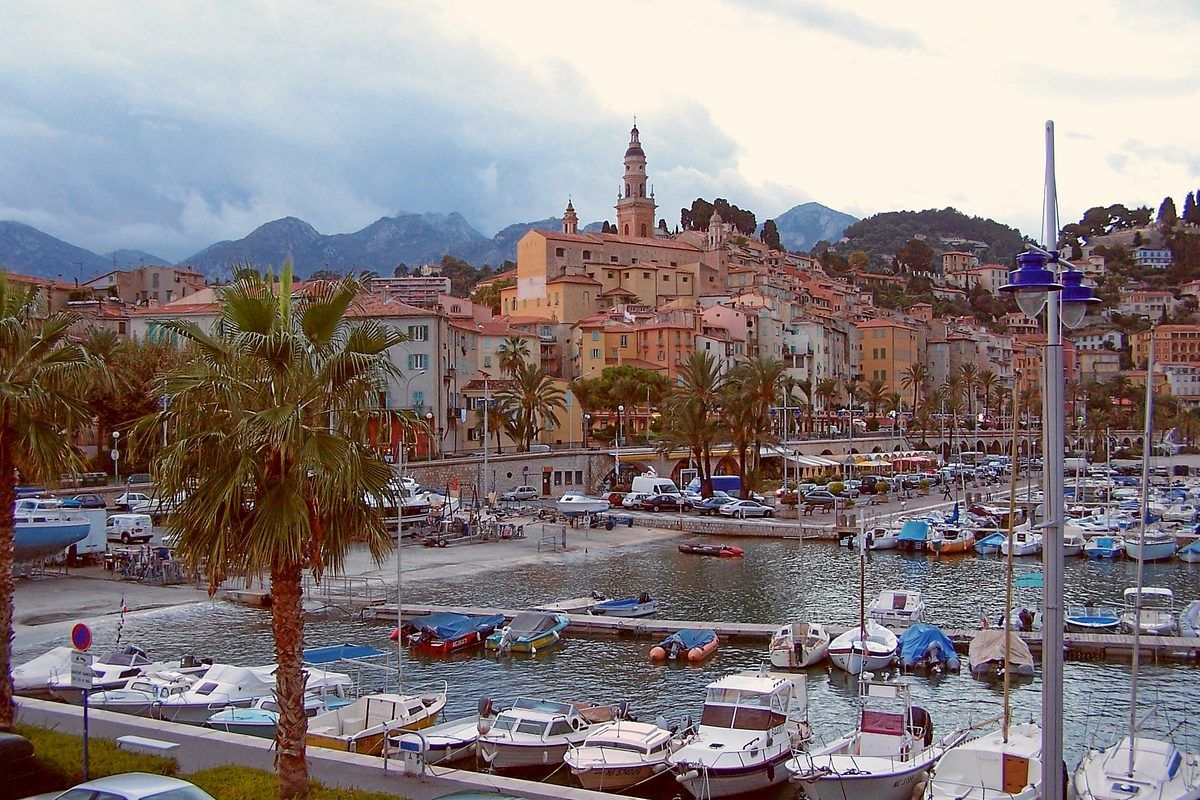

Why Visit Menton?
Menton occupies the far eastern edge of the French Riviera, tucked against the Italian border where the Alpes-Maritimes tumble steeply down to a sheltered bay. It is one of the quieter towns on the coast — noticeably less frenetic than Nice and nothing like Monaco — with a character shaped as much by Liguria as by Provence. The old town is a tier of ochre, apricot, and rose-coloured buildings stacked above the sea. The gardens are remarkable in the truest sense: several hold national heritage designations and draw serious horticulturalists from across Europe. And every February, the whole town gives itself over to the Fête du Citron, a fortnight of extraordinary citrus sculpture that has no real equivalent anywhere else in the world.
Menton rewards visitors who are not in a rush. It is compact enough to explore on foot in a day, but there is enough depth — in the gardens, the old town, the churches, and the market — to justify lingering longer.
When to Visit Menton
February–March is the obvious high point. The Fête du Citron transforms the Jardins Biovès into an open-air gallery of giant sculptures built entirely from citrus fruits, accompanied by night parades, marching bands, and large crowds. Book accommodation well ahead if you plan to be there during the festival itself.
Spring — particularly April and May — is excellent for the gardens. Menton has an unusually warm and sheltered microclimate, and the collections at the Serre de la Madone and Val Rahmeh botanical garden are at their most varied. The old town is pleasant to walk without summer heat, and the beaches are calm.
Summer is busy but manageable. The beaches attract local and international visitors alike, the morning market runs daily, and Menton maintains a lower-key energy than the larger resorts further west. The Festival de Musique de Menton — a chamber music series held against the backdrop of the Baroque basilica — takes place in August and has been running since 1950.
Autumn and winter see visitor numbers fall significantly. The light in October is excellent for photography, the gardens remain open, and the market is less crowded. The town is genuinely quiet by December, and the Lemon Festival preparations can be seen beginning in January.
Getting to Menton
The simplest and most practical way to reach Menton from anywhere on the Riviera coast is by train. From Nice, direct TER services run roughly every 30 minutes throughout the day, with the journey taking around 35 minutes. Tickets are inexpensive and can be bought on the day. From Monaco, the journey is around 15 minutes.
Menton’s station is a short, level walk from the seafront and a manageable 10-minute walk from the old town. This makes arriving by train straightforward even with luggage.
By car, the A8 motorway provides a direct route from Nice, but parking in the centre is limited and the narrow streets of the old town are not navigable by vehicle. For a day visit, the train is by far the better choice.
Menton is also the last French stop on the coastal rail line before Italy. The Italian town of Ventimiglia is around 12 minutes further, and the cross-border trip is effortless for Schengen-area travellers.
What to See in Menton
The old town (Vieille Ville) is the first thing most visitors head for. The streets are steep, narrow, and paved with traditional calade — pebblestone mosaic work. The Italianate facades in shades of orange, yellow, and deep terracotta reflect the town’s Ligurian heritage, and the overall effect is more northern Italian than recognisably Provençal. The Place aux Herbes, once the main market square, retains a central fountain and a quiet, unhurried atmosphere.
Basilica Saint-Michel Archange sits above the old town, reached by a broad ceremonial staircase. Built from 1619 at the instigation of Prince Honoré II of Monaco, it is a confident example of Baroque religious architecture: gilded interior, marble high altar, and frescoed vaulting. The square in front of it offers a clear view across the old port and the bay, and it serves as the outdoor stage for the August music festival.
The old cemetery crowns the hill above the basilica and provides panoramic views across the bay toward the Italian coast. It is one of those places that rewards the climb.
Jardins Biovès is the central park running through the middle of town — a long, formal green space where the Fête du Citron structures are erected each February and where locals walk on quieter days.
Jardin Serre de la Madone is the most celebrated of Menton’s gardens. Created by Major Lawrence Johnston between 1924 and 1939 — the same designer behind Hidcote in Gloucestershire — the six-hectare site rises in terraces through pools, statues, and a rich mix of Mediterranean and exotic planting. It holds both a Historic Monument designation and the Jardin Remarquable label. Allow at least 90 minutes; guided tours are available.
Jardin Botanique Val Rahmeh, managed by the National Museum of Natural History, is a more scientific collection: around 1,700 species drawn from tropical and subtropical regions, thriving in Menton’s exceptionally mild microclimate. Facing the sea, it is the only garden in France where certain subtropical species grow outside. Allow a similar amount of time as for Serre de la Madone.
Events in Menton
The Fête du Citron is the defining annual event — a two-week festival in February and early March centred on monumental citrus sculptures, evening parades, and market stalls selling lemon-based products sourced from the local groves. Around 250,000 visitors attend each year, making early booking essential for accommodation anywhere on the eastern Riviera.
In August, the Festival de Musique de Menton brings chamber music to the Parvis Saint-Michel, using the Baroque basilica and the sea as a backdrop. It is a smaller, more intimate event than the Lemon Festival but has a devoted following and excellent programming.
The daily morning market on the Quai Gordon Bennett operates year-round and is worth visiting regardless of when you arrive.
Where to Stay in Menton
Menton has hotels and rental apartments, mainly concentrated along the seafront and around the old port. For visitors exploring the broader Riviera, staying in Nice and making a day trip to Menton by train is a practical option: the journey is around 35 minutes each way on a very frequent service.
Practical Information
Menton’s train station is around a 10-minute walk from the Parvis Saint-Michel and the centre of the old town. The tourist office is on the Promenade du Soleil and provides maps, garden tickets, and current event information.
Walking is the only sensible way to explore the old town. The streets are steep and the paving is uneven in places, so comfortable shoes matter. Most of the main sights — the basilica, the market, the Biovès gardens, and the seafront — are within easy walking distance of one another.
Local lemon products are worth seeking out: Menton lemons have an Indication Géographique Protégée designation and are used locally in jams, vinegars, liqueurs, preserved preparations, and the classic tarte au citron. Several shops in and around the old town stock a range.
During the Fête du Citron, entry to the Jardins Biovès requires a ticket. The tourist office and the festival website both offer advance booking. Garden visits at Serre de la Madone and Val Rahmeh also require tickets, which can be purchased on site or in advance; a combined pass covering multiple gardens is available.
La ligne du littoral The whole coast by train, from Nice
Direct TER trains along the coast — approximate journey times from Nice-Ville. Temps de trajet approximatifs au départ de Nice-Ville.