Fête du Citron
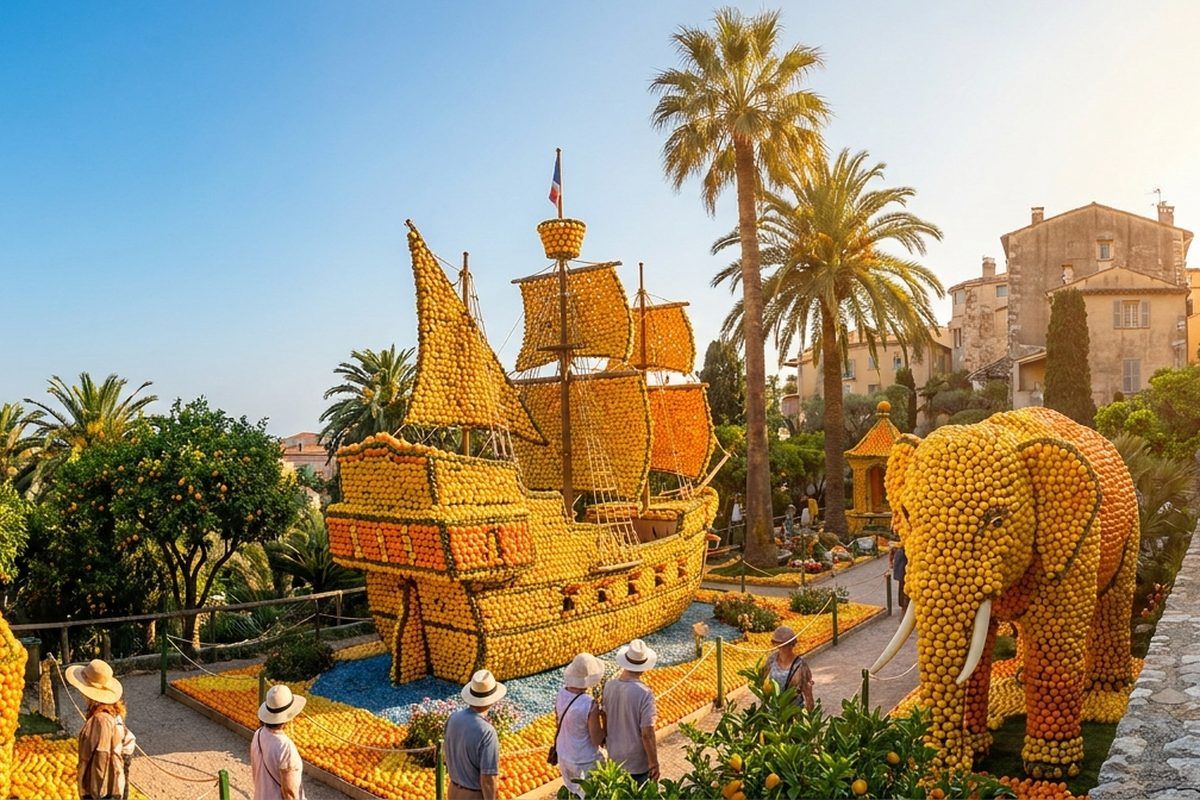
What Is Fête du Citron?
Fête du Citron — the Lemon Festival — is Menton’s annual citrus celebration, held every February in the small coastal town at the eastern edge of the French Riviera, a few kilometres from the Italian border. It is one of the most distinctive winter festivals in France: a two-to-three-week event built around enormous sculptures made from citrus fruits, colourful street parades, and a town that fills with visitors from across Europe.
The festival has roots going back to 1928, when a Menton hotelier organised a private exhibition of flowers and citrus in his hotel garden. It proved popular enough that the municipality took it over the following year, and by 1934 it had acquired its current name. Menton was once the leading lemon producer in Europe — its sheltered microclimate and long growing season made it well suited to citrus cultivation — and the festival grew directly from that agricultural identity. Today the event attracts around 250,000 visitors each year and has been entered into France’s inventory of intangible cultural heritage, recognised by the Ministry of Culture in 2019.
Each year takes a different theme, shaping the sculpture designs and parade floats. The 2026 edition — the 92nd — was themed “The Wonders of Life”. Themes from previous years have drawn on mythology, world cultures, fantasy, and the natural world.
When Does Fête du Citron Take Place?
The festival typically runs from mid-February to early March, spanning two to three weeks. Exact dates shift year to year; the 2026 edition ran from 14 February to 1 March, which is broadly representative of the usual window.
The parades — the most popular element — happen on Sunday afternoons and Thursday evenings during the festival period. The gardens exhibition is open throughout. Confirmed dates for each year’s edition are usually announced by the organisers in the autumn on the official website.
Where Does Fête du Citron Take Place?
The festival is spread across three locations in central Menton, all within easy walking distance of each other.
Jardins Biovès (Biovès Gardens) is the heart of the event. This long public garden along the Avenue Boyer is transformed for the duration of the festival into an open-air gallery of citrus sculptures. The structures reach up to ten metres in height, built from hundreds of thousands of lemons and oranges — around 140 tonnes of citrus fruit in a typical year. Entry to the gardens costs around €2.
Promenade du Soleil, Menton’s seafront esplanade, is where the daytime and evening parades (the Corsos) take place. Grandstand seating lines the route; standing places are sold alongside. The backdrop of the bay and the old town rooftops makes this one of the most striking parade settings on the Riviera.
Palais de l’Europe, the town’s cultural centre, hosts the Orchid Festival and a Crafts Fair — both free to enter. These offer a quieter complement to the outdoor spectacle, and the orchid show in particular draws its own dedicated following.
How to Get There
Menton sits at the far eastern end of the Riviera, around 30 kilometres from Nice and roughly three kilometres from the Italian border crossing at Ventimiglia.
By train this is the simplest and most reliable option. Regional TER trains run frequently between Nice-Ville station and Menton, with around 46 services per day. The journey takes approximately 32 to 36 minutes. Tickets start from around €8 and can be bought at station ticket windows or via the SNCF Connect app. There is no need to book ahead for standard regional trains — but on festival Sundays the services can be busy, so aim to travel early.
By bus, Zou line 600 connects Nice (stop: Arson / Fodéré, near Port Lympia) to Menton for €2.10 one-way. The journey takes around 75 minutes along the coastal road, which is scenic but significantly slower than the train — and can be slower still on festival days when road traffic is heavy.
By car, the A8 motorway from Nice to Menton takes around 40 to 50 minutes (tolls apply). The coastal Basse Corniche road is more scenic but adds time. Parking in central Menton during the festival is limited, and the area around the gardens and promenade can be congested on parade days. The train is a more predictable choice.
What to See and Do
The Sunday afternoon parade (Corso des Fruits d’Or) is the festival’s flagship event. It runs at 2:30 pm, with floats built entirely from citrus fruit moving along the Promenade du Soleil, accompanied by brass bands, folk dancers, and orchestras. Both grandstand seats and standing places require tickets, booked in advance through the official website.
The Thursday night parade (Corso Nocturne) covers the same route after dark, starting at 9 pm and finishing with a fireworks display over the bay at 10:30 pm. The citrus floats take on a different quality when lit against the night sky, and the fireworks bring the evening to a close on the waterfront. This is a popular choice for those who want a more atmospheric experience.
The Biovès Gardens are open throughout the festival and can be visited independently of the parades. The sculptures are crafted by specialist teams who work with fresh citrus, replacing fruit as needed to keep the structures vivid. Walking the full length of the gardens takes around 30 to 45 minutes; the larger structures reward a slower pace. The €2 entry is collected at the garden gates.
The Orchid Festival and Crafts Fair at the Palais de l’Europe are free. The crafts market features local producers selling limoncello, preserved citrus products, honey, and handmade goods — a calmer way to spend a morning before the afternoon crowds build.
Where to Stay for Fête du Citron
Menton is a compact town with a limited number of hotels, and accommodation books up quickly for the festival period — particularly the weekends with Sunday parades and the Thursday night Corsos. If you are planning to stay in Menton itself, book as early as possible.
Most visitors find it practical to base themselves in Nice and travel to Menton by train. The journey is short enough that a day trip or evening excursion is comfortable, and Nice offers a much wider choice of accommodation at a range of price points.
Practical Tips
Book parade tickets early. Grandstand seats for the Sunday Corsos and the Thursday night parades sell out well in advance. The festival’s online ticket office opens bookings several months before the event; do not assume you can buy on the day.
Arrive before the crowds. On Sunday parade days, the organisers recommend arriving in Menton by 11 am — well before the 2:30 pm start — to visit the gardens and find your spot without the peak queues. For the Thursday evening Corsos, arriving before 6 pm is the practical advice.
Dress for a February evening. Menton’s winter daytime temperatures are mild by northern European standards, typically 10 to 15°C and often sunny. The seafront promenade can be cool and breezy after dark, however. A warm layer is worth packing for the night parade.
Check the year’s confirmed programme. Parade dates, theme, and any changes to opening hours are confirmed each year on the official website (fete-du-citron.com). The broad structure of the festival is consistent, but specific dates shift each year.
Animals are not permitted on the parade routes or inside the Palais de l’Europe during the festival.
Frequently Asked Questions
- When does the Fête du Citron take place?
- The festival typically runs from mid-February to early March each year, spanning two to three weeks. Exact dates vary; check the official website (fete-du-citron.com) in the autumn for each year's confirmed schedule.
- How much does it cost to attend?
- Entry to the Biovès Gardens exhibition costs around €2. Grandstand seats for the parades cost approximately €30 for adults; standing places are around €16. The Orchid Festival and Crafts Fair at the Palais de l'Europe are free. Booking parade tickets in advance is strongly recommended.
- Can I visit Menton as a day trip from Nice?
- Yes, easily. Regional TER trains run frequently between Nice-Ville and Menton, taking around 35 minutes each way, with roughly 46 services per day. A day trip is the most practical option for most visitors staying along the Riviera.
- Is the festival suitable for children?
- Very much so. The citrus sculptures in the Biovès Gardens are spectacular for all ages, and the Sunday afternoon parades are family-friendly. Children under six enter free. The Thursday night parades with fireworks are popular with older children.