Festival International du Cirque de Monte-Carlo
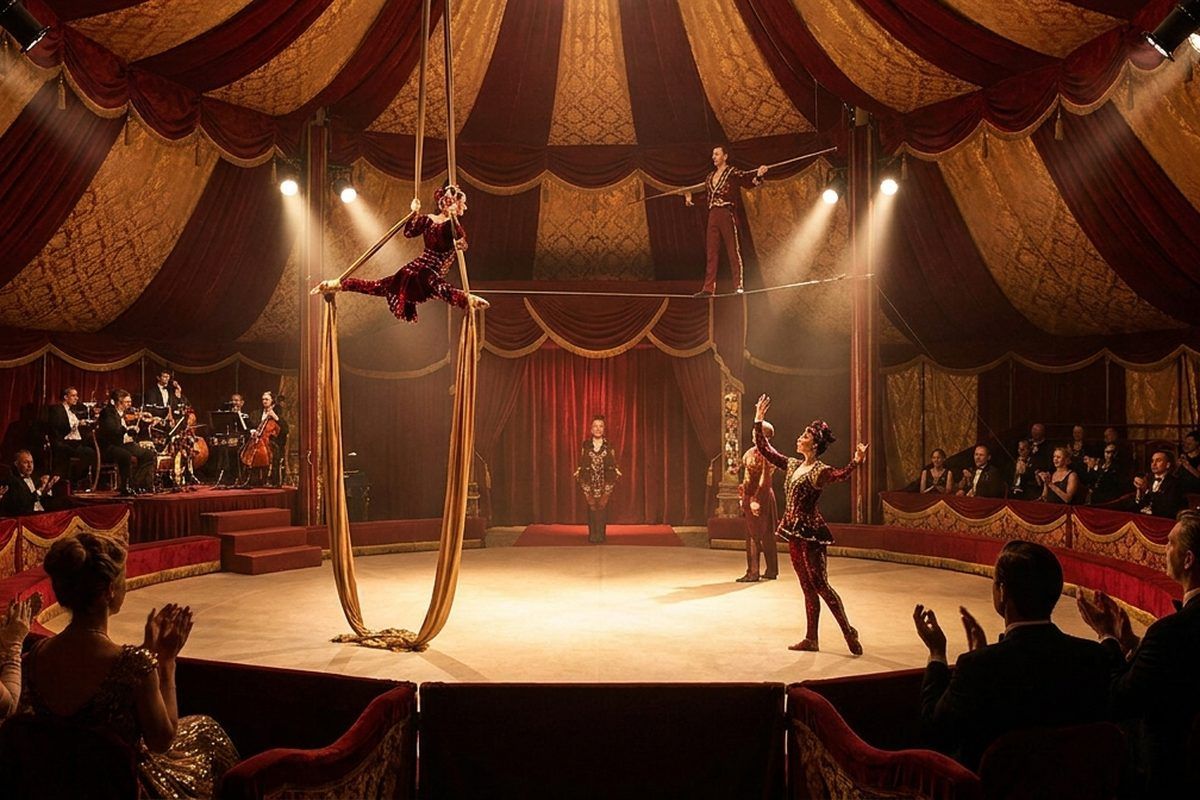
What Is the Festival International du Cirque de Monte-Carlo?
The Festival International du Cirque de Monte-Carlo is an annual competition and celebration of circus arts, held each January in Monaco. It is widely considered one of the most prestigious circus events in the world, drawing performers and industry professionals from across the globe to compete for the coveted Golden Clown award.
Prince Rainier III of Monaco founded the festival in 1974 with the aim of recognising and promoting circus at the highest level. What began under a borrowed big top on an open esplanade has grown into a major cultural fixture — a ten-day event that fills the Chapiteau de Fontvieille with 20 to 25 international troupes, totalling close to 200 performers.
The format is part competition, part spectacle. Acts representing every major discipline of circus arts perform before paying audiences and a jury of circus professionals, specialists, and journalists. The jury evaluates each number and awards Gold, Silver, and Bronze Clowns — the festival’s equivalent of Olympic medals. The competitive stakes give the performances an extra charge that distinguishes the festival from a standard touring circus show.
When Does the Festival International du Cirque de Monte-Carlo Take Place?
The festival runs for approximately ten days in January, typically in the latter half of the month. The schedule generally includes several evenings of competitive performances, a gala awards evening, and additional winners’ shows in the final days.
Alongside the main competition, the New Generation contest — which focuses on younger and emerging circus talent — runs concurrently, offering a separate programme for audiences who want to see the next generation of performers. Both events share the Fontvieille venue.
The 49th festival is scheduled for 22–31 January 2027. For future editions, dates are announced on the official festival website at montecarlofestival.mc, usually well ahead of the event.
Where Does the Festival Take Place?
All performances are held at the Chapiteau de Fontvieille — a permanent big top structure in Monaco’s Fontvieille district, which occupies reclaimed land on the western side of the principality, below the Prince’s Palace. The neighbourhood is quiet and low-rise compared with central Monte-Carlo: you will find the heliport, a small port, and the circuit museum nearby.
The venue itself is purpose-built for circus performance. Seating surrounds a central ring, so there is no poor angle; the proximity of the arena to the audience is closer than most theatres, which adds to the intensity of watching high-wire and aerial acts performed at short range.
The Fontvieille district is not directly served by the mainline train station (which sits beneath the rock of Monaco-Ville). Walking from the station takes around 15 minutes; the bus network offers a shorter journey for those who prefer not to walk.
How to Get There
The most practical route from Nice or the surrounding area is the train. Services from Nice-Ville station to Monaco-Monte-Carlo run roughly every 15 to 30 minutes, and the journey takes approximately 20–25 minutes. The trains are comfortable, affordable, and run into the evening, so attending a night performance and returning to Nice afterwards is straightforward.
From Monaco-Monte-Carlo station, follow signs down through the tunnels to the harbourside. Fontvieille is to your west. Bus line 6 connects the station area with Fontvieille and takes only a few minutes. On foot, the walk along the port is pleasant and takes around 15 minutes, though the route involves some gradient on the return.
Driving is not recommended. Monaco’s road network is dense and parking is expensive. The train removes the stress entirely and costs only a few euros each way.
What to See and Do
The competitive programme covers the full range of traditional circus disciplines. Any given edition of the festival might include flying trapeze, hand-to-hand acrobatics, teeterboard jumping, contortion, juggling, equestrianism and dressage, trained animal acts, and clowning. Acts are drawn from troupes across Asia, Eastern Europe, Latin America, and beyond, which gives the programme a genuine international variety.
The standard competitive performances take place over multiple evenings. These are the sessions at which the jury evaluates acts — the atmosphere is formal enough to feel like an awards event but relaxed enough for a family audience. Watching a jury-eligible act knowing that the performers are competing, not merely entertaining, changes how you watch. The precision and difficulty of the numbers become visible in a way that a touring show does not always bring out.
The gala evening, at which the Golden Clown, Silver Clown, and Bronze Clown awards are presented, is the festival’s centrepiece. Tickets for the gala are priced higher than standard competitive sessions and tend to sell quickly. If the gala is your priority, book as early as possible once ticketing opens.
The winners’ shows, held in the final days of the festival, offer audiences the chance to see only the prize-winning acts — a concentrated programme of the very best numbers from the competition. These tickets are typically priced lower than the gala and are a good option if you arrive later in the festival period.
The New Generation programme runs alongside the main competition and features younger performers. It is a lower-key event but worth attending if you are interested in the craft of circus at a developmental level, or if you are visiting with children for whom a shorter and more accessible show might suit better.
Where to Stay for the Festival International du Cirque de Monte-Carlo
Monaco has a handful of hotels, most of them at the upper end of the price range. For visitors who want more flexibility, Nice is the obvious alternative base. The train connection is fast and frequent, and basing yourself in Nice gives you the choice of returning after a late evening performance without the cost of Monaco accommodation.
Practical Tips
Book tickets early. The festival has a loyal following in Monaco and across the French Riviera, and popular sessions — particularly the gala evening — sell out in advance. Tickets are available through the official website (montecarlofestival.mc) and through FranceBillet. The box office can also be reached by phone on +377 92 05 23 45.
Dress warmly. January in Monaco is mild by northern European standards but not warm. The Chapiteau is a big top, not a heated indoor venue. Layers are advisable, particularly for evening performances.
Allow time to get to the venue. The walk from Monaco station to Fontvieille takes around 15 minutes. If you are taking the bus, check the Monaco bus network in advance, as services can be infrequent at some times of day.
Choose your sessions deliberately. A single trip to Monaco for the gala evening is a very different experience from attending two or three competitive sessions across the festival week. Think about which combination suits your schedule and budget, and book accordingly.
The New Generation competition requires separate tickets. If you want to attend both the main festival and the New Generation programme, you will need to book each separately.
Frequently Asked Questions
- When does the Festival International du Cirque de Monte-Carlo take place?
- The festival takes place in January each year, typically for around ten days in the latter half of the month. The 49th edition is scheduled for 22–31 January 2027.
- Where is the festival held?
- All performances take place under the Chapiteau de Fontvieille — a purpose-built big top in Monaco's Fontvieille district, close to the principality's heliport.
- How do I get to the festival from Nice?
- The simplest option is the train from Nice-Ville station to Monaco-Monte-Carlo (approximately 20–25 minutes). From Monaco station, Fontvieille is around a 15-minute walk or a short bus ride away. Trains run frequently throughout the day and evening.
- What are the Golden Clown awards?
- The Golden Clown (Clown d'Or) is the festival's highest honour, awarded by a jury to the most exceptional competitive act. Silver and Bronze Clowns recognise other outstanding performances. The awards are presented at a gala evening held during the festival.
- How much do tickets cost?
- Ticket prices vary by seating and performance type. Competitive shows typically start from around €30–45, with gala evening seats reaching €100–210 for premium positions. Winners' show tickets are generally in a lower price range. Book early — the festival has a loyal following and popular sessions sell out.
- Is the festival suitable for families with children?
- Yes. The programme is designed to appeal to audiences of all ages, and the atmosphere under the big top is lively and accessible. The concurrent New Generation competition showcases younger circus performers and is particularly well-suited to family audiences.