Un Festival C'est Trop Court
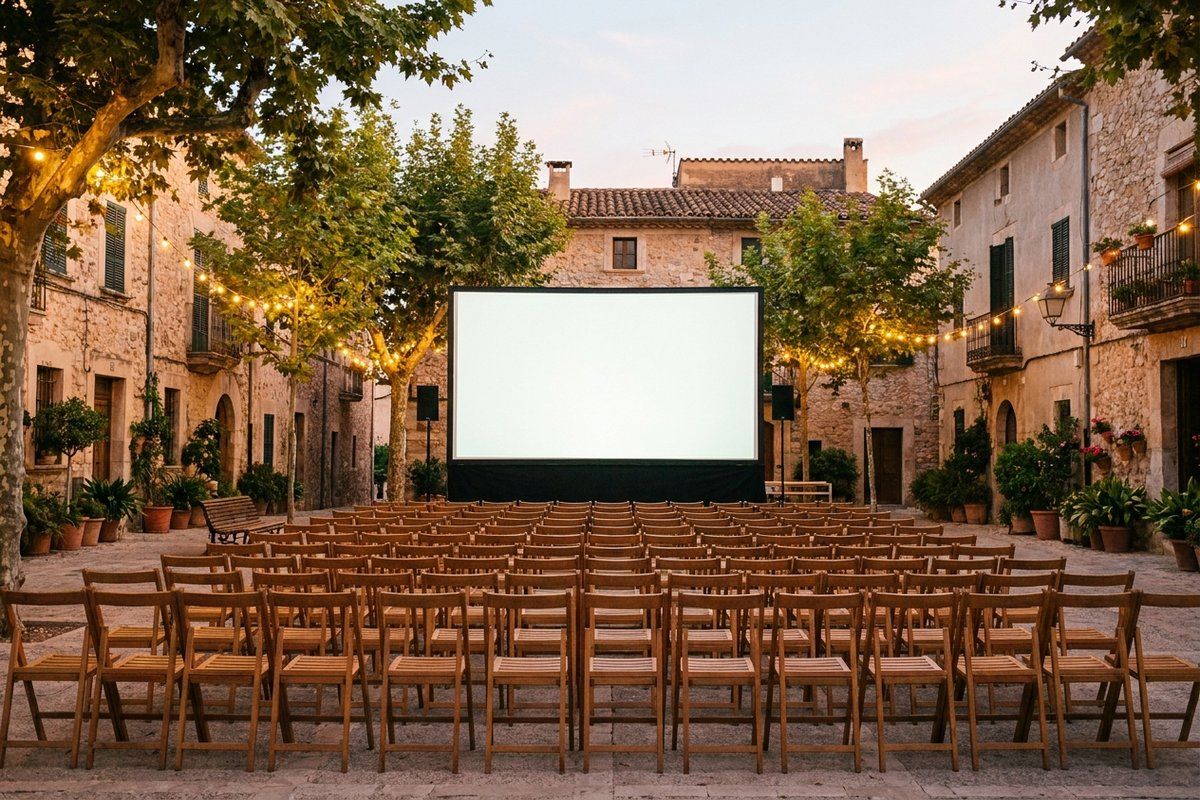
Un Festival C’est Trop Court — the name is a deliberate play on words: c’est trop court means both “this genre is too short” and “one festival isn’t enough” — is Nice’s annual celebration of European short film. Created in 2000 by the association Héliotrope, it has grown into one of France’s most significant short film events, classified Category 1 by the CNC (Centre National du Cinéma). Each October, over eight days, around 150 films from more than thirty countries screen across a circuit of cultural venues in the city — cinemas, contemporary art spaces, a theatre — with four competitive programmes judged by professional juries, industry networking sessions, and a dedicated strand for younger audiences.
Short film occupies an unusual position in the film world: taken seriously at festivals, harder to find in ordinary distribution, rarely given the kind of sustained attention that a week-long competitive festival allows. Nice’s role in hosting one of the oldest and most structured European short film festivals is well established; Un Festival C’est Trop Court has operated long enough to have developed its own alumni and to have sent works on to broader recognition elsewhere.
When Is Un Festival C’est Trop Court?
The festival runs each October over eight days. The 2026 edition is scheduled for 2–9 October 2026.
The timing has been consistent across recent editions: the 2024 edition ran 4–11 October; the 2025 edition ran 3–10 October. The 2026 dates are confirmed. The programme — including the full selection of films, screening times, and venue assignments — is typically published in late summer, once the juries have made their selections.
Submission deadlines for filmmakers open in January and close in May, so by August the selected works are confirmed and the schedule begins to take shape. If you are planning a trip to the Riviera in early October and want to coincide with the festival, the dates are reliable enough to book around.
What to Expect
Héliotrope, the organising association, has been promoting short-form cinema since 1997. The festival — launched three years later, in 2000 — built on that mission and has maintained a clear editorial identity: European work, emerging directors, a structured competitive framework, and a professional development dimension alongside the public programme.
The four competitive sections divide the programme along clear lines:
Compétition Européenne is the flagship: around 40 fiction films produced or co-produced in European countries, competing for the Grand Prix and a suite of jury prizes. In 2025, fifteen prizes worth a total of €19,000 were awarded across all four competitions. This section draws entries from across the continent and is the most internationally varied in scope.
Courts d’Ici focuses on work produced or shot in the Provence-Alpes-Côte d’Azur region and Corsica, providing a specific platform for filmmakers rooted in the south of France. This section tends to have a particular resonance for local audiences and those curious about regional production.
Expérience programmes experimental and formally adventurous cinema — films that push against the conventions of the medium, including hybrid forms and video art. It is the least predictable section and often the most thought-provoking.
Animation brings together short animated films from European schools and studios, covering the range of techniques and approaches that European animation encompasses. The works tend to be selected from the educational and independent end of the spectrum rather than commercial production.
Beyond the competitions, the festival runs the Nice Short Meeting, a professional development strand with workshops, project presentations, and networking opportunities for filmmakers and industry representatives. The association also runs La Résidence du Sud, a nine-month screenwriting residency that supports four emerging authors each year — an investment in new work that feeds the long-term pipeline of the kind of cinema the festival champions.
A Jeune Public (young audience) strand programmes films specifically suited to younger viewers, making the festival meaningfully family-accessible rather than simply open in principle. These screenings are typically held in the afternoon and require tickets.
The venues change somewhat between editions, but the core circuit runs through Le 109 (the festival’s main hub), the Théâtre National de Nice, MAMAC (Nice’s Museum of Modern and Contemporary Art), and the Rialto cinema — a mix of dedicated film spaces and cultural institutions that gives the event variety in setting as well as programme.
Getting There
The festival is spread across multiple venues in Nice rather than concentrated at a single site, which is part of its character: it occupies the city rather than one building. Le 109, at 89 route de Turin in the northeast of Nice, is the principal hub. Several screenings also take place at central venues near Place Masséna.
Within Nice: The Lignes d’Azur network covers the city thoroughly. For Le 109 and the route de Turin area, bus services from the city centre provide the most direct route. For central venues — Rialto cinema, TNN, MAMAC — the tram (Line 1 or 2) is simpler: the Masséna and Jean Médecin stops are close to all three. A single Lignes d’Azur ticket costs €1.70 and covers transfers within 74 minutes.
From Cannes: Direct SNCF TER trains connect Cannes to Nice-Ville station in around 35 minutes. The coastal service runs frequently through the day and evening, making a festival excursion from Cannes entirely practical. Nice-Ville station is around 1.5 km from Place Masséna — a 15-minute walk or a short tram ride from the central festival venues.
From Antibes: TER trains to Nice-Ville take around 20–25 minutes. Antibes has a direct rail connection with no changes required.
From Monaco: The TER from Monaco-Monte Carlo to Nice-Ville runs in approximately 20–25 minutes. Evening trains run until late, so attending a festival screening and returning the same evening is straightforward.
From Menton: Around 30–35 minutes by TER to Nice-Ville, with frequent services.
If you are staying in central Nice — particularly in Vieux Nice or around the Cours Saleya — the central festival venues are within walking distance. Le 109 is further out and best reached by bus.
Practical Tips
Plan your programme before you arrive. With four competitions and 150 films spread across eight days and multiple venues, the scheduling is dense. The festival website (ufctc.com) publishes the full programme with venue assignments and screening times once selections are confirmed in late summer. A little advance planning avoids clashes and unnecessary travel between venues.
Book tickets early for popular screenings. Screenings with filmmakers in attendance and headline competition events can fill up. Tickets are available through ufctc.com/billetterie/. Some events are free — check the programme for details before assuming admission is charged.
October in Nice is pleasant but variable. Daytime temperatures typically sit between 16°C and 21°C, with evenings noticeably cooler than the summer. A light jacket is useful for moving between venues after dark.
The Jeune Public screenings are the entry point for families. These are specifically programmed and ticketed separately. If you are attending with children, check that strand first rather than assuming the main competition works are suitable for all ages — short film competitions can carry mature content.
The festival is at its best approached with commitment. Dipping in for a single screening gives you a flavour; following one section across several evenings gives you the full experience. Regular festivalgoers tend to pick one or two competitions to track closely.
If you are a filmmaker, the Nice Short Meeting runs alongside the public programme and is worth registering for separately. Submission windows for the following October’s edition open the following January.
Frequently Asked Questions
- When does Un Festival C'est Trop Court take place?
- The festival runs each year in October over eight days. The 2026 edition is scheduled for 2–9 October. Dates for future editions are announced on the official website at ufctc.com.
- Is the festival open to the general public?
- Yes. All four competitive programmes are open to the public. Tickets are required for most screenings, though some events are free. A dedicated Jeune Public (young audience) strand makes the festival accessible to families.
- Which venues host the festival?
- Screenings take place across multiple venues in Nice, including Le 109 (the main hub, 89 route de Turin), the Théâtre National de Nice, MAMAC, and the Rialto cinema. The full programme with venue details is published each autumn on ufctc.com.