Nice Carnival Weekend: A 3-Day Itinerary
Un week-end de Carnaval à Nice
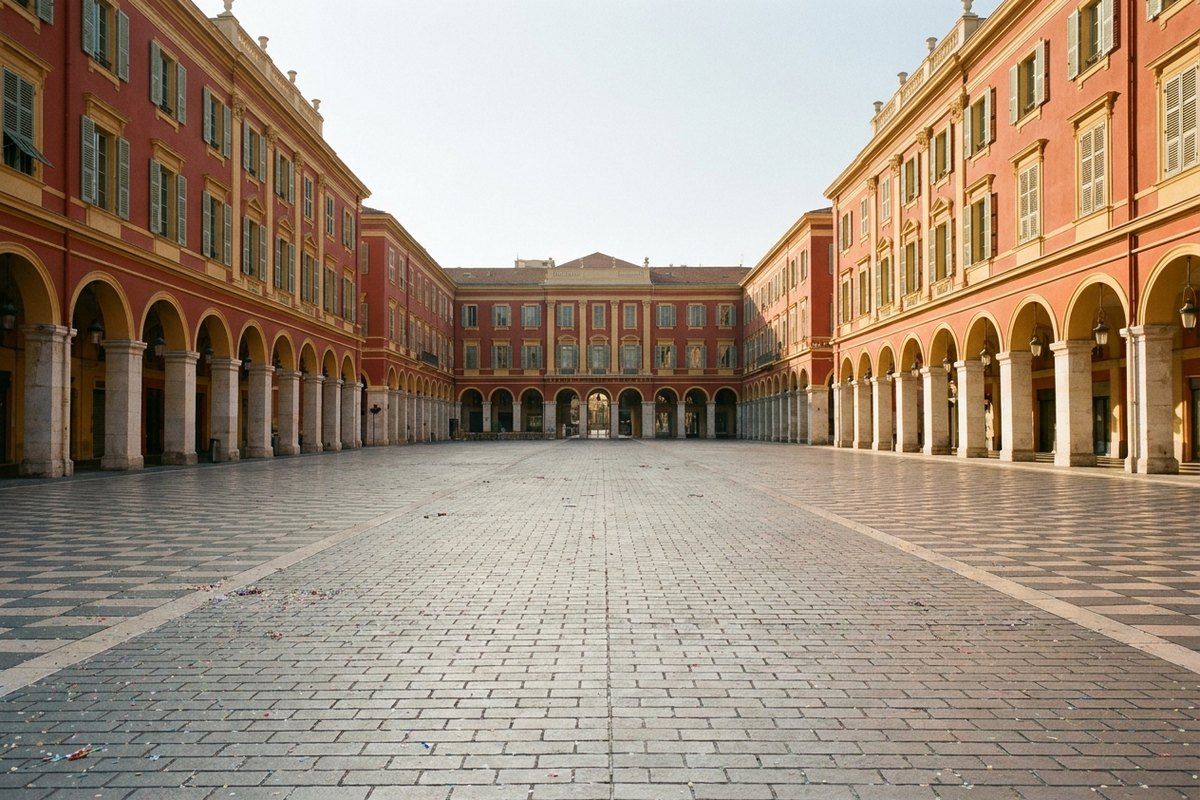
This itinerary is built around a Saturday within the Carnaval de Nice — the carnival typically runs for three weeks in mid-February to early March, closing around Mardi Gras. Saturdays tend to follow the same pattern: a Bataille de Fleurs (flower battle) in the afternoon, then an illuminated float parade in the evening. That double bill is the reason to shape a weekend visit around a Saturday.
Check the official programme at nicecarnaval.com before travelling. Exact event days shift from year to year; the programme is published each autumn alongside ticket sales, and grandstand tickets sell quickly.
Day 1: Arrive and Explore Vieux Nice
The old town — Vieux Nice — is a few minutes’ walk from Place Masséna and the main carnival route. It is the right place to begin.
If you arrive before early afternoon, the Cours Saleya is still running. This broad square at the edge of the old town holds Nice’s main market from Tuesday to Sunday: flowers and fresh produce on most mornings, brocante (antiques) on Mondays. It winds down by about 1pm. Come before noon to get it at its fullest, or sit at one of the café terraces and watch the last stalls pack up.
Vieux Nice is immediately behind the market — a compact grid of narrow streets in the Ligurian baroque style, with ochre and terracotta facades. Rue Droite and Rue Pairolière are the main spines; Place Rossetti, near the cathedral of Sainte-Réparate, is a good place to sit. The area is well supplied with places to eat, from casual socca counters to proper restaurants.
The carnival changes the feel of the evenings. Costumes drift past. The streets around Place Masséna feel different once the sun sets — floats parked along the route, the square lit up. A walk after dinner is worth it.
Day 2: The Flower Battle and the Evening Parade
This is the long day. You will be out from morning until well after dark.
Start at the Cours Saleya market. Get there before 10am; the flower stalls are at their best in the first couple of hours, and socca is available from early at the stands near the covered end. After the market, head east and up to the Colline du Château — Castle Hill. A free lift operates at the eastern end of the Promenade des Anglais; there are also stairs from Vieux Nice. The fortress itself is gone, but the hilltop park is one of the best viewpoints in the city: the Baie des Anges curving west, the old town directly below. Walk down through Vieux Nice for lunch.
The Carnival Village on the Promenade du Paillon is free to enter throughout the carnival period — a good way to absorb the atmosphere before the ticketed events, and well suited to families with children.
The Bataille de Fleurs typically begins around 2:30pm on the Promenade des Anglais. Around twenty flower-laden floats move slowly along the seafront — mimosa, gerberas, carnations thrown into the crowd. It lasts roughly ninety minutes; secure a position before 2pm. A ticket is required regardless of costume.
After the flower battle, find somewhere for dinner close to Place Masséna. The evening corso typically begins around 8:30pm: monumental illuminated floats, several storeys high, processing through the square accompanied by brass bands and costume troupes. Grandstand seats give the clearest view. Anyone in a full carnival costume can enter pedestrian viewing zones free of charge — check the current year’s rules at the official site.
The evening parade runs late. Factor in the tram or walk back before heading out.
Day 3: A Slow Morning Before You Leave
There is no need to rush on the final day. The Promenade des Anglais is at its quietest in the morning — a good time to walk a section of it west from Place Masséna along the bay.
The Marc Chagall National Museum on Avenue du Docteur Ménard is a short ride north on Bus 5. It is small, purpose-built, and rarely crowded — Chagall’s large biblical paintings were designed for this specific space. Allow ninety minutes.
A final lunch in Vieux Nice fits easily before heading to the station or airport. Tram Line 1 runs from central Nice to Nice-Ville in around ten minutes; Tram Line 2 connects the city to Nice Côte d’Azur airport in approximately thirty-five minutes from the Jean-Médecin interchange.
Practical Tips
Book tickets early. The programme is published each preceding autumn; grandstand tickets for Saturday evening corsos go quickly. Buy as soon as tickets are on sale at nicecarnaval.com.
Transport on parade days. The Masséna tram stop may be restricted during events — check the carnival’s transport page before you travel. Tram Line 1 from Jean-Médecin or Cathédrale–Vieille Ville gets you close. Do not drive into the city centre on parade days.
Dress for February. Daytime temperatures are typically 10–13°C; evenings are cooler. The evening corso runs late — bring a warm layer.
Full costume rule. A genuine full fancy-dress costume qualifies for free entry to illuminated corsos (not the flower battles). Confirm the current year’s rules on the official site before relying on this.
Carnival Village. Free, and worth an hour between events. It runs the full length of the carnival on the Promenade du Paillon.
Where to Stay in Nice
A Vieux Nice base works best for this itinerary: the carnival venues on Place Masséna and the Promenade des Anglais are a short walk away, and you can return to the apartment between daytime and evening events. Gilli, a two-bedroom apartment on the Cours Saleya managed by Stay YNA, sleeps six — book several months ahead for the main parade weekends.